
Maple Pecan Scones

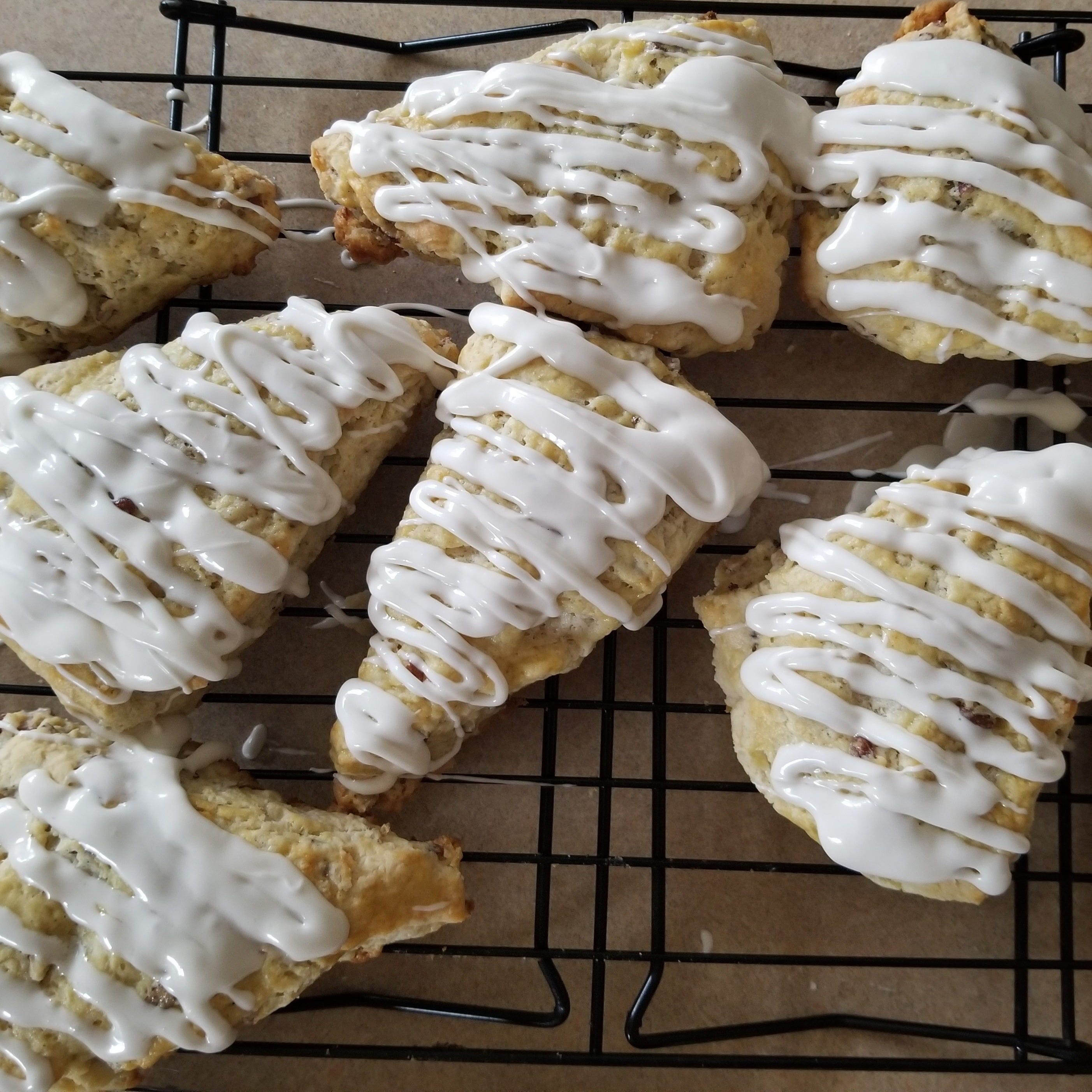
The first time I tried a scone was in 1989. I was living in Chicago where I attended law school and every day after class my friend and I would go study at a cafe in our neighborhood. I had never been to a cafe before then. Growing up in Farm Country U.S.A. and attending college at the University of Illinois in the 80’s, we didn’t have “cafes”. The only coffee I had ever purchased up to that point was in a grocery store, typically Folger’s, Sanka and the little tins of International Coffee, my favorite being Swisse Mocha. In fact, a treat was mixing together a pot of Folger’s with several bags of hot cocoa when Swisse Mocha was unavailable.
My friend, on the other hand, was very cultured and had already traveled to Europe. She was the one that suggested we meet at a cafe to study, after scoping out ones in between our apartments.
The first time I walked into our chosen cafe, I was in awe. Little two-seaters lined big windows that faced busy Halsted Street. Drapes hung in the windows, giving the cafe a definite European feel. At the back, a counter filled with pastries was near the very impressive, and slightly intimidating, espresso machine.
It wasn’t the first time I tried espresso. In the 80’s we had shopping malls that were filled with specialty food stores, including Gloria Jean’s Coffee. It felt odd at first—standing in line to purchase coffee at the back of a store inside a mall. But the smell of Hazelnut drew me in, as it did everyone. In fact, I typically got the Hazelnut coffee. But one time, I splurged on a Cafe Mocha. It felt like I was drinking dessert in the form of coffee, and I loved it.
I know my family is Italian and I should have had experiences with espresso and cappuccino at that point. But, poor Italian-Americans that had lived through the Great Depression and were stuck in the Midwest were not drinking espresso. Instead, our pantries were filled with Folger’s and Taster’s Choice. Drip coffee or freeze-dried were are choices, not cappuccinos and lattes. We started our day with the familiar jingle:
The best part of waking up, is Folger’s in your cup.
and ended it the same way.
My first experience with a cafe left me hooked. I tried everything on the menu over the course of the next three years. Cafe au Laits became a favorite, along with Cafe Mochas. My husband and I even purchased a little espresso machine for our apartment. But we were regulars at the cafes. And of course, became enamored of the pastries, especially croissants.
I had never had a scone before seeing them in the cafes. I knew they existed. In high school I was a romance novel junkie —my favorite being historical romance novels set in Europe in the 1700-1800’s. Scones were often mentioned as part of afternoon tea.
So one afternoon, with a cafe au lait, I tried my first scone.
It was. . . fine.
I just wasn’t impressed. It tasted like a biscuit.
I didn’t try a scone again until one weekend when I happened to be traveling in Michigan. My friend and I stopped for coffee and an unusual scone flavor caught my attention. . .Lavender.
I had never eaten lavender before. It thought it was reserved for soaps and lotions.
It was. . . .pretty good. Kind of hard, like the first one I tried.
I suppose up to this point my problem with scones was simply that the ones I tried seemed dry. Was that what a scone was? I presumed so.
By the 2000’s, scones weren’t so rare. I encountered them often in coffee shops. They were a favorite in Bed and Breakfast establishments. I had yet to make them, and didn’t have a particular fondness for them.
Until I started to bake. The first flavor of scone I tried to make was Lavender. I followed a recipe I found online.
It was. . .okay. Still hard. And dry.
But, this time I was in my phase of baking to understand pastry. I realized that the recipes I had been trying were more akin to true British scones and contained very little butter. I researched some Americanized scone recipes and found a few using more butter. What if I added more butter? I mean Paula Dean was always saying everything is better with more butter, right?
I found a buttery scone recipe and adapted it to my flavor profile.
Suddenly I found myself in love with scones.
In fact, I was scone obsessed. There was a scone for every season: Blueberry Lavender in the summer and Cranberry Orange in the winter. Raspberry Lime in the spring and Pumpkin Spice in the fall. At the bakery, we had Scone Saturdays. I passed my scone obsession on to many customers over the years.
I have been making scones for over twenty years now. It’s my Thanksgiving tradition to have a big platter of scones on the counter for morning munching, which tides us over until the charcuterie board comes out. My sister and I always wrapped up our scones and took them with us when we went shopping the next morning. We would eat our scones alongside big cups of coffee as we sat in our cars to warm up after going store to store. There really is something special about a scone.
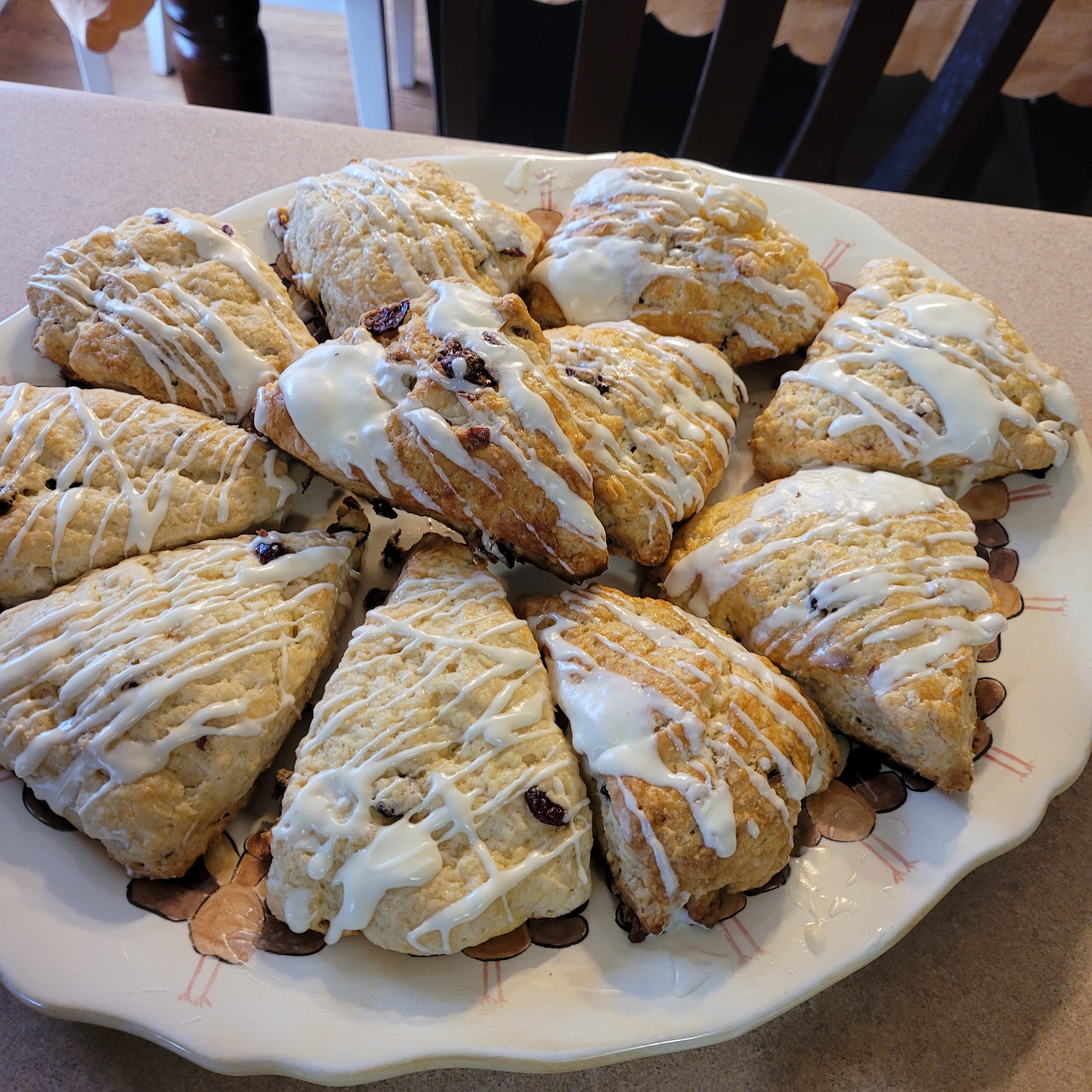
Cranberry Orange Scones
One of my family’s favorite flavors is Maple Pecan, and I will be making them again this holiday. They want them all year long in fact.
I hope you like them.
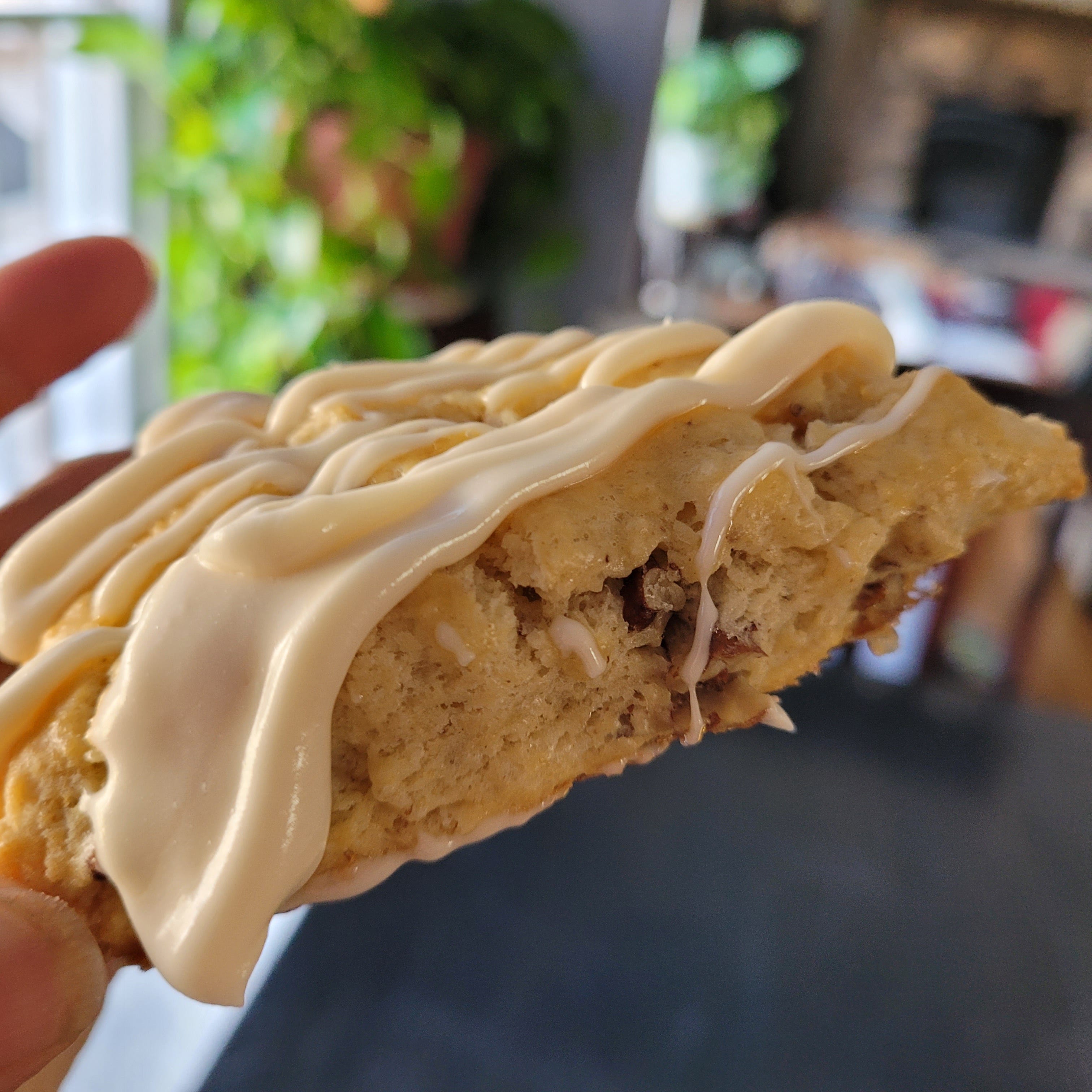
Maple Pecan Scones
Scone Ingredients:
4 C all purpose flour
1/4 C brown sugar
2 T baking powder
2 t salt
1/2 t cinnamon
2 1/2 sticks cold unsalted butter, cubed (20 T)
4 eggs
1 C heavy cream
2 T maple syrup
1 C pecans, rough chopped
egg wash
Glaze:
1 C sifted powdered sugar
1/3 C heavy cream
2 T maple syrup
Directions:
Place first five dry ingredients into the bowl of a Kitchen-Aid fitted with a flat beater. If you don’t have a Kitchen-Aid place them in a mixing bowl. Mix to incorporate.
Add cold, cubed butter to your bowl and mix (or cut in using a pastry cutter) just until the dough resembles little “peas” of dough.
Mix eggs, cream and syrup together. Add all at once to dough and mix just until it comes together.
Add pecans, again just until they are mostly mixed into the dough. It’s important to not overmix.
Pour dough onto floured surface. You will need to bring it together, then divide it into two dough balls.
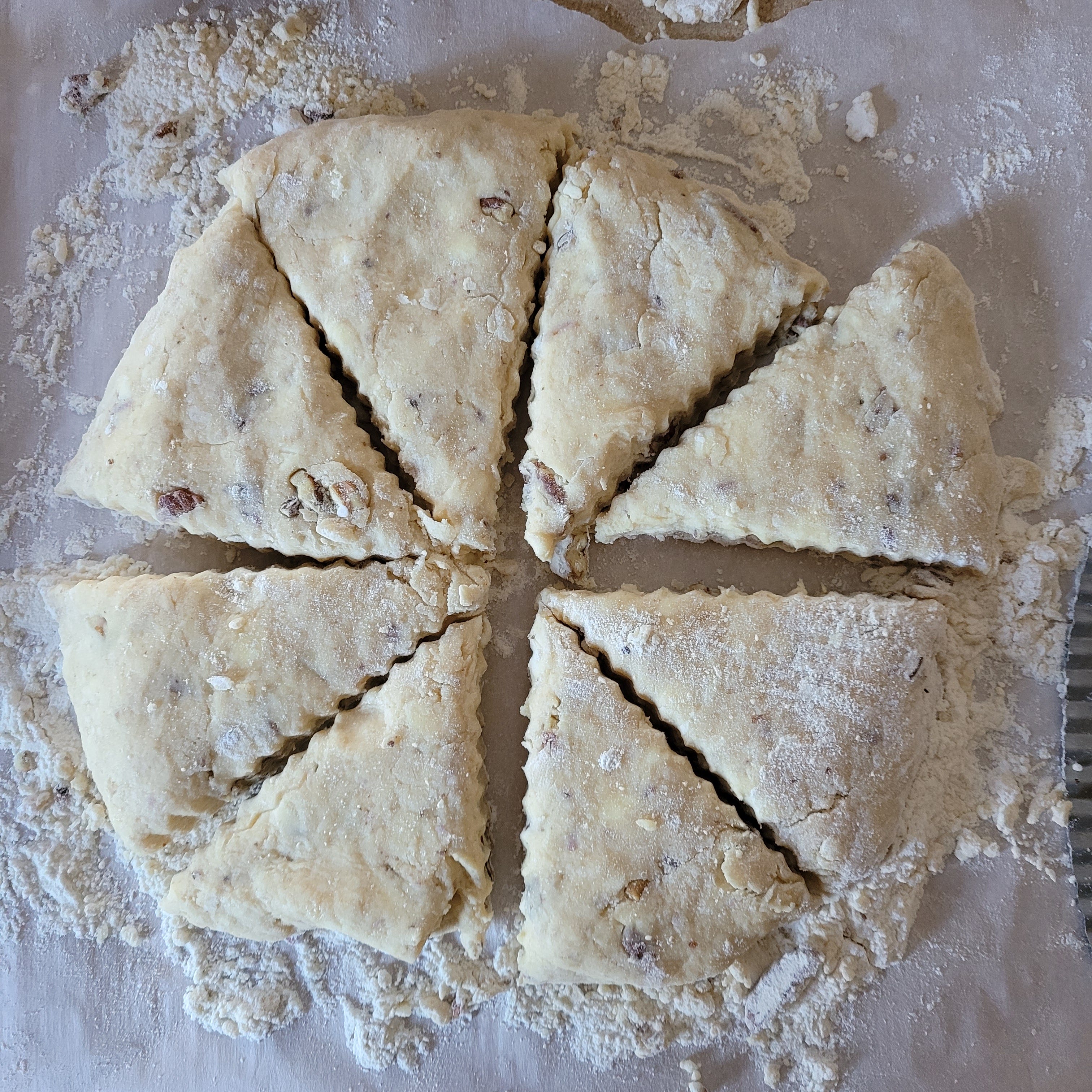
Using a rolling pin, form each dough ball into a “pie shape”, rolling slightly. Do not flatten dough. Roll just enough to give it some shape, like the picture above.
Cut your scone pie into eight wedges. Egg wash the top of each one, and sprinkle with some granulated sugar if desired.
Bake at 350 degrees for 20 to 22 minutes, or until golden brown and done.
Mix glaze ingredients together well, and drizzle onto scones when cool.
Scones keep very well in a covered container, or frozen for up to three months.